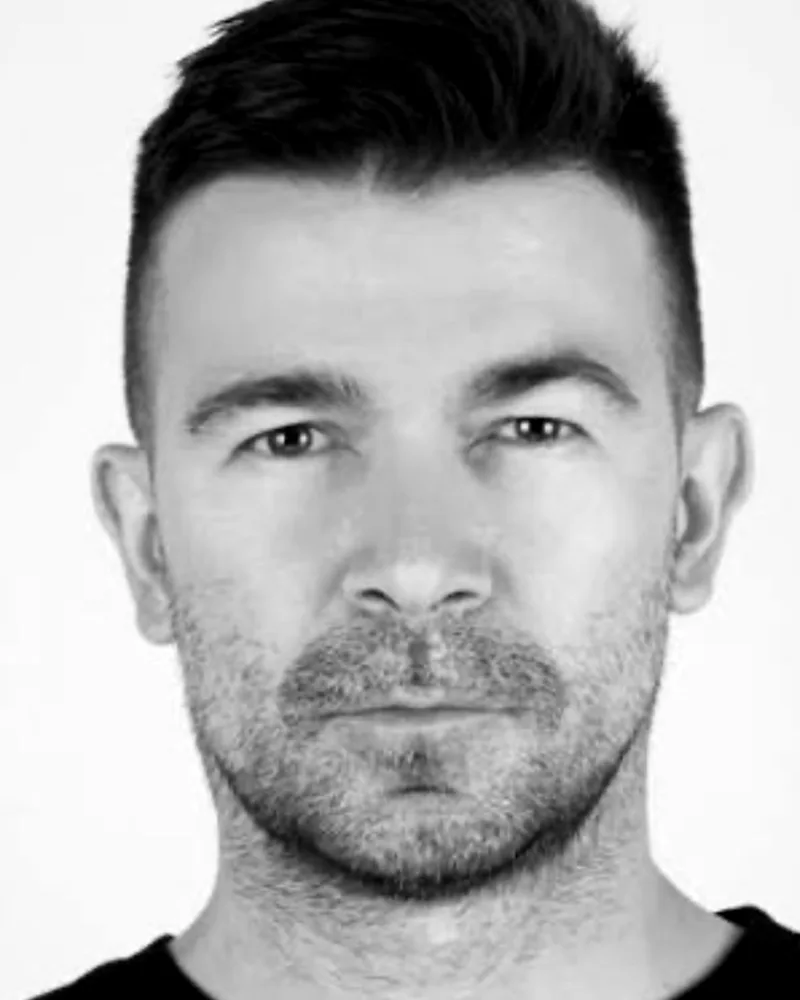
Luca Dea works the other side of the booth. While the DJ plays, he’s at the edge of the decks with a phone held steady, catching the drop, the hands in the air and the moment a room loses it. For nearly two decades the Italian videographer has turned single nights into memories anyone can replay.
01 · TrevisoWhere it started
Luca grew up in Treviso, in northern Italy, raised in part by his maternal grandparents. His grandfather even taped football matches on VHS so young Luca could watch them after an early bedtime. He lost both grandparents as a kid, and he has told Deep Tech Mag that his passions grew stronger afterward, partly to keep their memory alive.
As a teenager he was into rap and hip-hop. Then friends brought him to Sunday afternoon parties around his hometown, and house and techno took over.
02 · Hitting recordMemories, not productions
He started filming around 2007 on a small camera meant mostly for photos. One of his first clips of a major artist was Stephan Bodzin playing live in Treviso that year. On March 27, 2008, he launched his YouTube channel.
“I started recording because I wanted to keep memories for myself.”
Luca Dea, to Gray Area (2025)Once the videos were online, he realized how many people couldn’t make it to these nights. Sharing them turned a personal habit into a public archive.
03 · Going all inThe turning point
In 2011 he left his job in PR and party promotion to focus on video, and went to Miami Music Week for the first time, a trip he calls a turning point. Sven Väth runs through the story: Luca first heard him in 2008, and he told Gray Area that his 2012 video of Väth at Cocoricò is still one of his most viewed.
It wasn’t always smooth. In September 2013 a brand-new hard drive died and took most of his summer footage with it. Only the best clips survived, because they were already on YouTube. Every DJ who has lost a drive full of music knows that feeling.
At a glance
- FromTreviso, Italy
- What he doesFilms, livestreams and archives dance-music events
- On YouTube sinceMarch 27, 2008
- Camera of choiceiPhone (since 2022)
04 · Phone in handRaw over polished
In 2022 he switched to an iPhone 14 Pro and decided it was good enough for what he does. The style is clean, mostly unedited footage that shows how a night actually felt, not a glossy after-movie. He held off on a logo for years so the work wouldn’t be about him, then added a camera-lens mark in 2016 after seeing his clips reposted without credit.
05 · Michael BibiTwo phones, one comeback
One night Luca calls unforgettable was Michael Bibi’s return to Ibiza after cancer treatment. He filmed it with two phones at once: one livestreaming to Instagram, one recording the set. Separately, during the 2022 Ibiza closings, Bibi posted that Luca deserves a documentary of his own, according to Luca’s Gray Area interview.
06 · The rulesHow he works the room
Luca says he films for himself first and won’t film anything he doesn’t like. He respects how close each DJ wants the camera to be. He also worries that people will start filming parties instead of dancing together. For him, the party stands for something simple.
“Culture, inclusion, sharing.”
Luca Dea, to Deep Tech Mag (2026)07 · What’s nextStill not at the top
Luca has said he still has plenty of projects ahead. This year Lost Beach interviewed him at its Trotamundo 2026 festival, and Rave On Snow, the December 10–13, 2026 festival in Saalbach, Austria, credits him with exclusive content on its website.
08 · Why we picked himSaving the night
Crate Saverz is about saving the music DJs have spent years collecting. Luca has spent years saving something just as hard to replace: the nights themselves. One lost hard drive taught him what every DJ learns sooner or later. The music and the moments are worth keeping.